
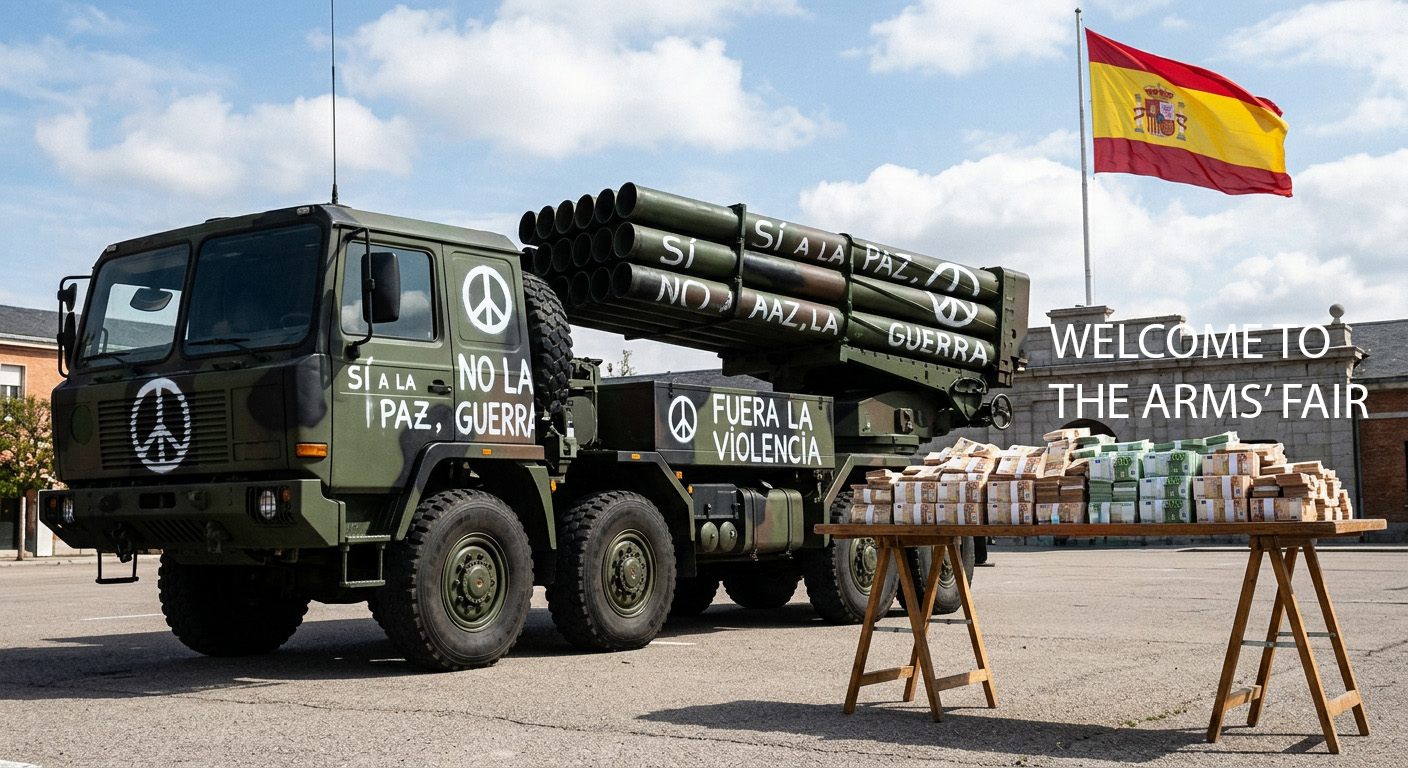
Most of us recognise the inconsistencies and contradictions in ourselves, so maybe we should not be surprised that our politicians are similar and change their minds and promote policies that seem to be in contradiction with each other. Politicians make promises when they seek power, yet so often fail to deliver when that power is theirs. Prime Minister Sir Keir Starmer made pledges when he was bidding for the Labour Party leadership. But they were empty promises, and his failure to deliver is a betrayal of those who voted for him. He looks weak as he performs his U-turns and he has become quite practised at saying one thing and meaning another.
In recent days, referring to the United States’ attack on Iran, Sir Keir has declared that the UK Government does not believe in “regime change from the skies”. He did not of course say anything along these lines when Trump kidnapped President Nicolás Maduro from Venezuela, killing at least 100 people in the attack. He states he would not commit the UK’s military to ‘anything unlawful’, that he is comfortable with using bombs as a defence but not in a manner that is offensive. Since bombs and missiles are designed to destroy and kill, are they not always offensive when they are fired? Initially he indicated that he opposed allowing US planes to use UK bases for its assault in Iran but in an apparent U-turn (another one) he has agreed that the US may now make use of them for defensive purpose. The bases include RAF Fairford in Gloucestershire and the Diego Garcia site in the Chagos Islands in the Indian Ocean. Very soon bombers, 146ft B-1 Lancers, were landing at Fairford. Sir Keir then decided that the aircraft carrier HMS Prince of Wales should be placed on “high readiness”. In trying to appease some of his party and members of the public, he has managed again to sound weak and indecisive, has succeeded in incurring President Donald Trump’s displeasure and has possibly undermined the ‘special relationship’. Trump stated that he is “not happy with the UK” and told reporters that Starmer is “no Winston Churchill”. And Sir Keir’s attempt a few days later to show a measure of loyalty to the US has backfired. The American President remarked: “That’s OK, Prime Minister Starmer, we don’t need them any longer — But we will remember. We don’t need people that join Wars after we’ve already won!”
But when it comes to Spain, Trump is showing far more than displeasure. He is clearly angry and planning reprisals.
Spain has stated that it believes in the de-escalation of the situation, negotiation & respect for international law. Spain has barred US aircraft from using the American bases at Morón de la Frontera and Rota in the south for this war. President of Spain Pedro Sánchez commented: “Spain doesn’t have resources like oil reserves or nuclear bombs but that doesn’t mean we will not fight against imperialist Israel and try to stop them”. And Foreign Minister Jose Manuel Albares said: “We cannot resign ourselves to war becoming the natural way in which states relate to one another & establish a balance of power”. Trump is threatening a punitive trade embargo and remarked “Spain has been terrible”.
There are calls for the rest of Europe to support Spain and take the same action. In fact the European Council president, Antonio Costa, said on Wednesday on X: “I have just held a call with President Sanchez to express the EU’s full solidarity with Spain.The EU will always ensure that the interests of its member states are fully protected.” But the EU is not united and the President of Spain is the only leader to openly condemn the strikes. Most EU countries have been cautious and have been quick to condemn the Iranian retaliation and favour regime change in Iran. Bulgaria for example said that Iran should stop its attacks and condemned the strikes on Gulf States as they expand “the scope of the dangerous military escalation.” President Alexander Stubb of Finland said:“Finland condemns Iran’s unjustifiable and indiscriminate strikes on the countries in the region.” And Prime Minister Rob Jetten of the Netherlands said Iran’s attacks must stop. EU states do not urge restraint when it comes to the US and Israeli assaults and make no mention of which countries began this armed conflict.
Many, especially on the left, have praised Spain for showing logic and sanity and for realising that peace and diplomacy are vital in the modern world. And Spain is receiving plaudits from around the world. But is Spain consistently anti-war? In November last year Spain received a visit from President Zelenski of Ukraine and strong measures of support for Ukraine were agreed. Part of this was a military package worth €615, including new defence equipment costing about €300M, €100M to NATO’s PURL programme for air defence systems and €215M through the EU’s SAFE Instrument for the manufacture of anti-drone systems and search and air surveillance radars. Many of these were developed by Spanish companies.
Spain received praise for its total arms embargo on Israel introduced in 2025 which banned the sale of weapons, dual-use technology, and military equipment. Yet in 2025 Spain exported €890M of Weapons, mainly to Slovakia, Ukraine, Turkey, the United States, the United Kingdom, Saudi Arabia and Australia. There was also a 40% increase in arms sales to Morocco. And Spain is of global significance in the arms trade. This trade is of growing importance to Spain, the 7th or 8th largest arms exporter in the world.
The arms trade is embedded in our world. This is shown in international trade data and security agreements. Although it is dominated by a few key countries, it is almost out of the question for any country to have no involvement whatsoever in the arms trade. And nations who are heavily involved know that if one of them backed out completely the consequences would be immense in terms of global and domestic disruption. Spain is taking a moral stand over the assault on Iran but is as deeply immersed in the trade in weapons as the rest of us.
Andrew Feinstein has written and spoken extensively about the arms trade which “grows ever more sophisticated, complex and toxic in its effects”. Can we ever put a stop to this evil multi-billion dollar industry? We are faced with powerful vested corporate interests and countries which place an immense value on the arms trade, especially because of its contribution to economic growth. And they feel the need to keep hold of military technological expertise as different nations vie for leverage. They feel no shame for the level of corruption in this murky, secretive world.
As Andrew Feinstein pointed out over a decade ago, “The reality is that the corruption in the global arms trade is not the consequence of a couple of bad apples, a couple of rotten people… It’s actually built into the structure, the very DNA of the trade”.
We must hold on to the hope that, even if it is gradual, the trade in weapons will become less profitable and have restrictions placed on it as more and more people recognise that it is an iniquitous business. We will need to protest against it for a long time and persuade more and more people of its immorality. Condemning the use of weapons in one particular armed conflict may be a start, but no country consistently opposes the trade. We are immersed in it.
But given the will there is a route forward. There are ways investment could shift from weapons to renewable energy and other sectors that could prevent job losses and lead to a much safer world. It is the will that is needed and the recognition that this immoral trade must come to an end. While it is right to applaud Spain for their stand at the present moment, we should not forget that a global arms trade continues to thrive, leading to death and destruction for many and huge profits for a greedy minority.
Discover more from Penumbrage
Subscribe to get the latest posts sent to your email.