
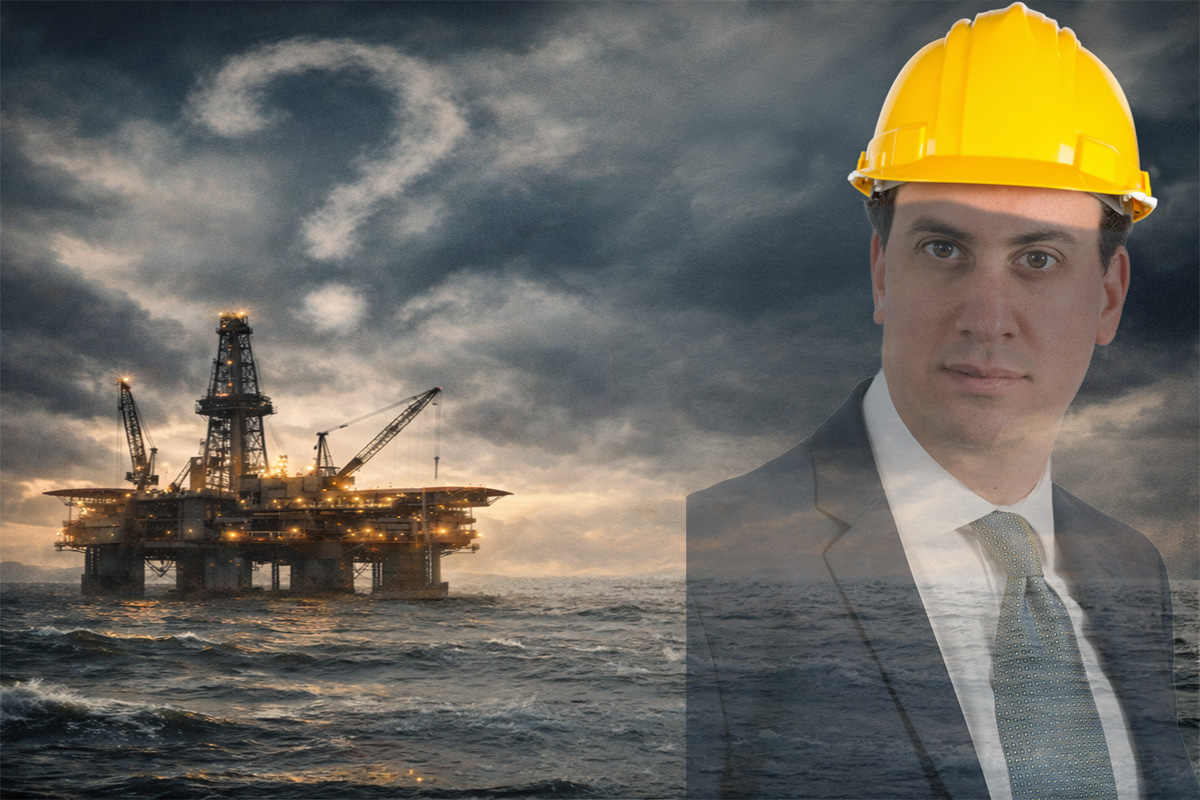
One of the consequences of Trump and Netanyahu’s illegal and unprovoked attack on Iran is that people across the world are facing massive increases in household energy bills as well as in petrol and diesel prices. Predictably, Ed Miliband, the Energy Secretary, is facing pressure to confirm the drilling licences granted under the previous government for Rosebank and Jackdaw North Sea oil fields.
One of the loudest voices in support of allowing drilling to take place is that of Reform leader Nigel Farage.
Even before the current crisis, Farage was arguing that global fossil fuel consumption is still rising and that even strong supporters of net zero “have to accept the world will still be using oil and gas up until 2050 and beyond”.
He also argues that restricting drilling harms jobs and industry and promises that Reform UK would expand drilling, cut taxes, and scrap net zero.
He and others in the industry frame new drilling as a practical necessity rather than an ideological choice.
Worryingly, Ed Miliband has not yet confirmed that the licences will be revoked.
The problem is that the arguments in support of issuing these licences are weak.
If Ed Miliband is wavering, he needs to read the well-researched Carbon Brief which challenges the myths associated with allowing further drilling in the North Sea.
For example, reopening the North Sea will not guarantee fuel security. The UK’s oil and gas prices are set on international markets, not domestically. We lost our rights in the 1980s when this asset was sold off under Margaret Thatcher. Once a licence is issued, the oil belongs to the company, not the UK.
Therefore, more drilling does not reduce prices at the pumps.
Another claim is that the new licences would create “thousands of jobs”. This too is misleading. The reality is that
- North Sea jobs have fallen by 70,000 in the last decade.
- New fields create short-term construction jobs, not long-term employment.
- Rosebank’s “1,600 jobs” claim is inflated. Independent analysis say it will create 255 short term jobs at best.
The future job growth is in renewables, not oil and gas.
Unlike Norway, the UK privatised and extracted quickly. Whereas Norway still has over 40% of its oil still available, it has been estimated that the UK has less than 3 per cent. So all this fuss will be for a tiny amount of the fossil fuel that remains.
But the real issue is wider and far more serious than jobs and reductions in the cost of living. It is about the long-term health and survival of our planet.
The Intergovernmental Panel on Climate Change is blunt.
- Existing fossil fuel infrastructure already exceeds the carbon budget for 1.5°C.
- New oil and gas fields make 1.5°C impossible.
- Continuing expansion pushes the world toward 2.5–3°C this century.
UN Secretary General António Guterresis makes this clear
“Investing in new fossil fuel infrastructure is moral and economic madness.”
The IPCC says every fraction of a degree increases:
- Heatwaves
- Floods
- Storm intensity
- Droughts
- Wildfires
At 2–3°C:
- Once in a century floods become annual events
- Heatwaves that kill thousands become normal summers
- Wildfires become uncontrollable in many regions
This is not abstract, it’s already happening at 1.2°C.
The IPCC is unambiguous:
- Burning oil, gas, and coal is the main driver of global warming.
- Renewables (wind, solar, hydro, geothermal) produce no CO2 when generating energy.
So investing in renewables is essential. It reduces emissions immediately, slows global warming and reduces the risk of crossing climate tipping points.
This is the single biggest lever humanity has.
Therefore, Ed Miliband has no choice. The decision on North Sea licences is not simply a policy question. It is a test of political resolve.
The case for new drilling rests on short-term pressures and overstated benefits. The case against it is grounded in economic reality, energy market dynamics, and the scientific consensus on climate change.
There is no meaningful middle ground.
The decision must be a loud NO.
Discover more from Penumbrage
Subscribe to get the latest posts sent to your email.