
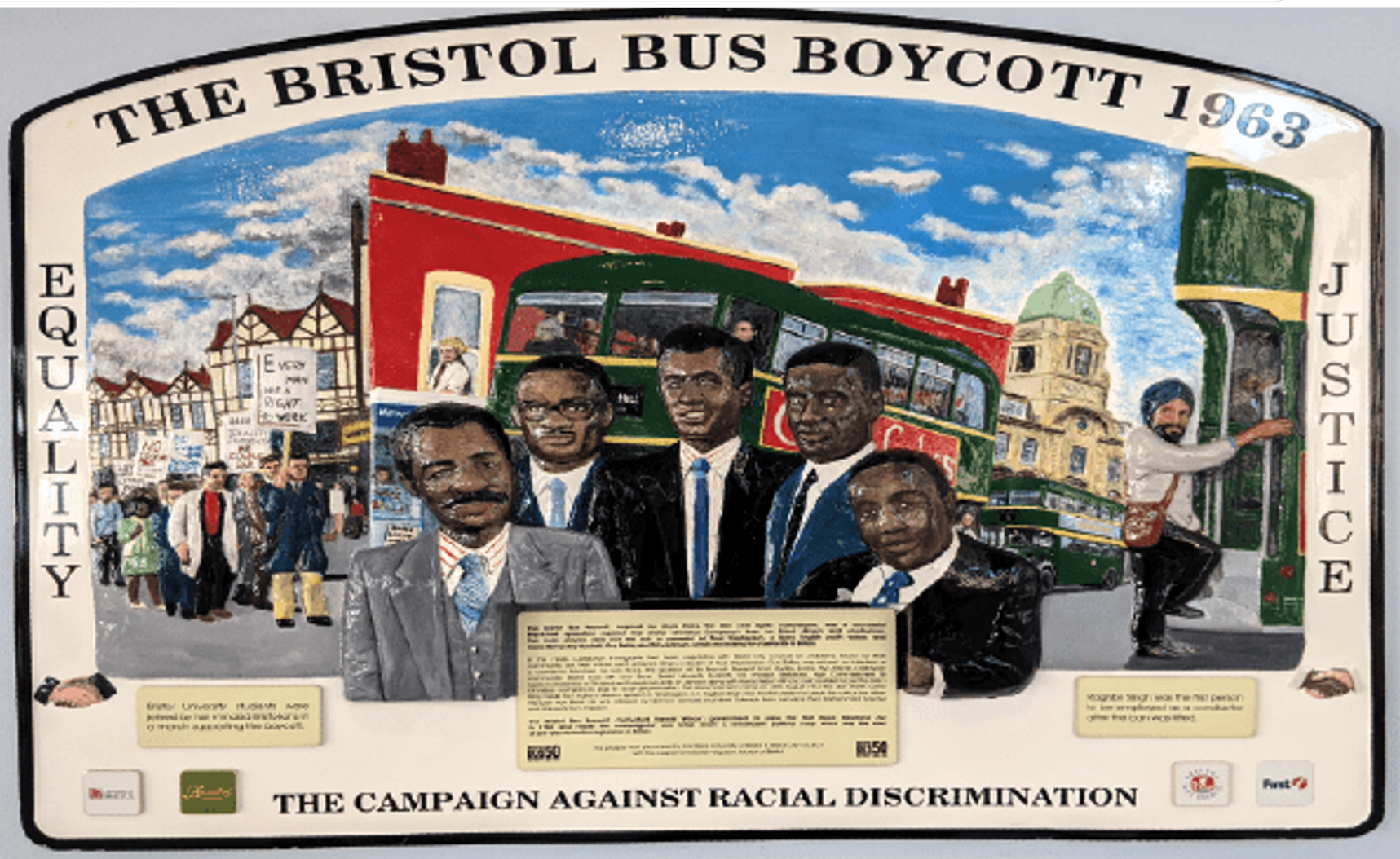
In the 1950s about 1,000 African Caribbean migrants lived in Bristol, and by 1962 this number had grown to about
3,000. There was a backlash from some of the white British population, alarmed by what they saw as growing numbers,
and fuelled by the Nottingham and Notting Hill race riots of 1958. There were demands for immigration to be controlled,
and the Immigration Act was passed in 1962. This act placed greater restrictions on the entry of Commonwealth
citizens into the UK. The law now favoured those who were highly skilled, such as professional people, and they
required work permits.
Black people in Bristol were subject to racial hatred and they found it difficult to find housing and any jobs other than
low paid ones. They mainly lived in the area of St Pauls, and many white residents blamed them unfairly for creating
poor conditions. There was discrimination in both housing and employment and some violent attacks from young white
men, such as Teddy Boy gangs. So people in the community set up their own groups and churches and these included
the West Indian Development Council (WDC), which became a key organisation in the events of 1963.
In 1963 Guy Bailey applied for a job as a member of the bus crew with Bristol Omnibus Company, which was part of the
Transport Holding Company. The manager of Bristol bus depot told him, “We don’t employ Black people”. The company
felt that their position was a strong one because in 1955 the Transport and General Workers’ Union (TGWU) Passenger
Group had passed a resolution that “coloured” workers should not be employed as bus crews. The same discrimination
existed against both Black and against Asian people. The company employed them only in garages and staff canteens.
In 1963 four young men formed an action group. It was from this group that the WDC was formed. Their spokesperson
Paul Stephenson was inspired by the Montgomery bus boycott, 1955-1956, which lasted for a year and ended with the
desegregation of public transport in Alabama and throughout the United States. The group suggested a boycott in
Bristol. This was announced by the WDC at a news conference on 29 April and so the boycott began. It lasted for four
months, and Black people stopped using the buses. They were supported by many white people. Students lent their
support in March and there was a protest against the local council, which was involved with the bus company and
colluded in the situation. The MP Tony Benn also spoke out, as did the High Commissioner for Trinidad and Tobago.
The Bristol Evening Post commented that the TGWU opposed apartheid in South Africa and asked what trade union
leaders were doing about racism at home.
When questioned about the boycott, the general manager of the company, Ian Patey, remarked: “I understand that in London coloured men have become arrogant and rude after they have been
employed for some months…”
At times there was a great deal of tension in the city but the continued support from various quarters began to see
results. The campaign was joined by local church leaders, CND and left-wing members in the union and the Labour
Party. At the end of August 1963 the colour bar was removed and the first non-white bus conductor, Raghbir Singh, was
appointed on 17 September; shortly afterwards two Jamaican and two Pakistani men were employed.
The boycott was a significant Black-led campaign. It was entirely peaceful and resulted in the company overturning
their decision. Many people correctly see it as an extremely significant moment in the UK civil rights movement.
We cannot of course be complacent and believe that our attitude to minority ethnic people has improved. The far right
is still threatening society, and the government’s hostile attitude towards asylum seekers is leading to intolerable
suffering and deaths. And of course those migrants who are welcomed are those with more money and greater skills.
Both the recent Conservative government and the current Labour government shame us all with their closed borders
policy and hostility to those from overseas who may be fleeing a multitude of dangers and seeking a better life and who
have so much to contribute to our country.
Discover more from Penumbrage
Subscribe to get the latest posts sent to your email.