
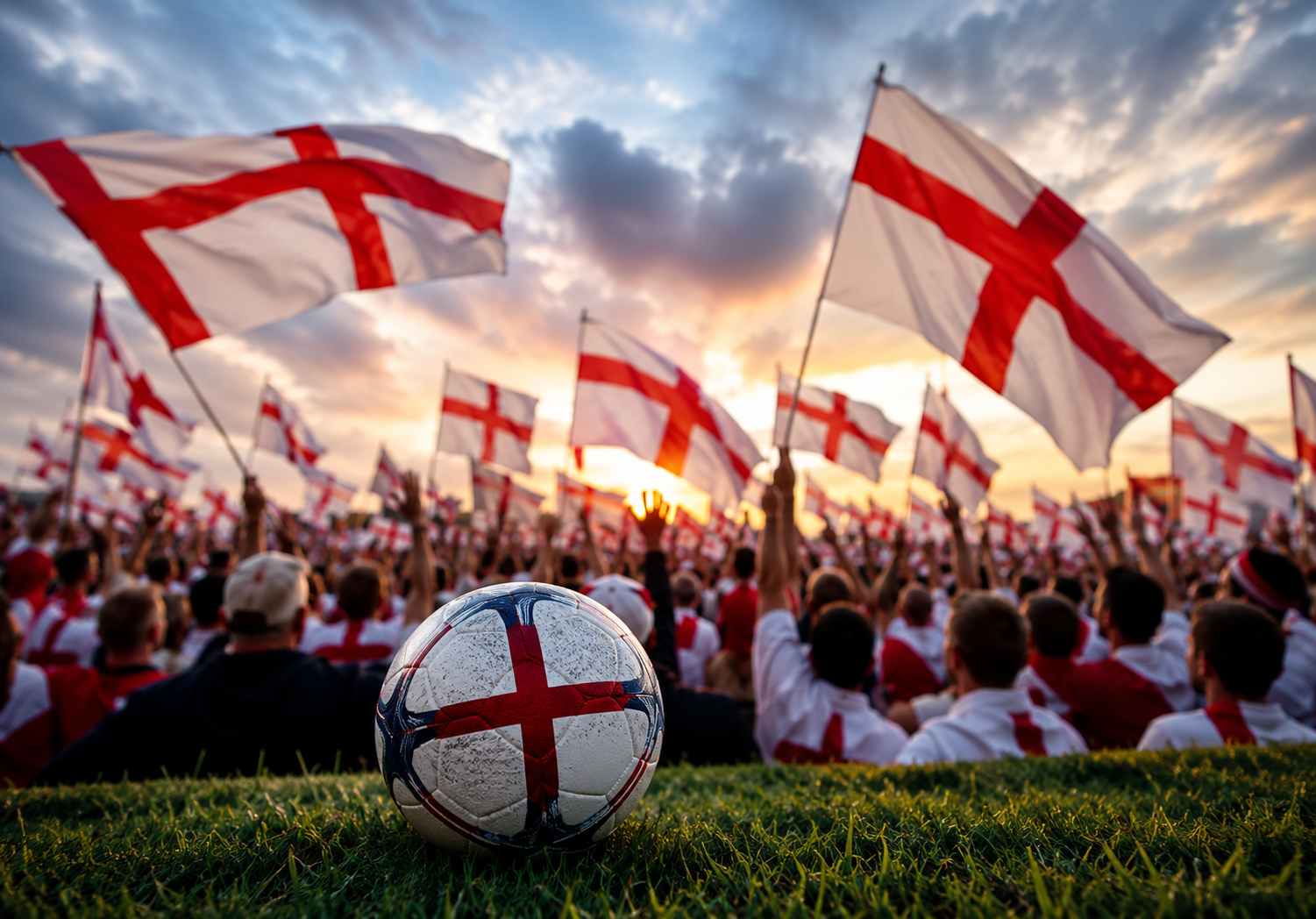
I don’t pretend to be an avid follower of football, but the jubilation on the fans’ faces after Jude Bellingham scored the winning goal against Norway in the World Cup quarter finals was infectious, as was their rendition of “Wonderwall” and “Hey Jude”.
I therefore couldn’t help but be irritated at manager, Thomas Tuchel’s comments that they had been “lucky” and had made lots of technical mistakes.
Anyone with the faintest knowledge of leadership knows that you don’t improve morale by publicly criticising your team. Anything that had to be said should have been said in private after recognising the positive aspects of the match and celebrating the success. It is unlikely that this will do anything to improve the chances of England winning against Argentina on Wednesday.
Yet, although I think Tuchel handled it badly, he may inadvertently have reminded us of something important. England did not win because England is a great nation. England won because eleven highly-skilled footballers performed better than eleven equally committed footballers from Norway. Their success was a triumph of talent, teamwork and preparation, not evidence of national superiority and they can and do make mistakes.
When an English scientist makes a breakthrough, we rarely pour into the streets draped in the flag. When a British surgeon pioneers a new technique, strangers do not embrace one another in pubs. We do not chant the names of teachers, carers or engineers.
Yet eleven footballers win a match and suddenly “we” have won.
The language is revealing. “We beat them.” “We were brilliant.” “We deserved it.”
Those of us who watched it did nothing of the sort. We sat on a sofa, stood in a pub or shouted at a television. The running, the training, the injuries and the pressure belonged entirely to the players.
So how does their achievement become ours?
Perhaps football offers something increasingly rare, a sense of belonging. For ninety minutes, millions of people who disagree about almost everything can share the same hope. Class, race, politics and geography temporarily recede. The stranger beside you becomes an ally because you both want the same ball to cross the same line.
There is something positive about that. But there is also something worth questioning.
Nationalism has always understood the power of collective emotion. Flags, songs, uniforms and crowds create a sense of us. And once there it becomes remarkably easy to create a “them”.
The problem comes when the language and emotions of the stadium begin to seep into the way we see the world outside it. We are encouraged to identify with people we have never met simply because they were born within the same borders. At the same time, people born on the other side of those borders become opponents.
Sometimes this is harmless, and often it is dangerous. History tells us that national pride is not always benign.
The irony, of course, is that modern football constantly undermines the very nationalism it appears to celebrate. The players we cheer may have parents or grandparents born elsewhere. Their managers, coaches and medical teams are international. Their clubs are owned, financed and supported across borders. The present England squad is one of the most diverse we have ever had, The coach is German and at least eleven team members have a migrant background, including Harry Kane (Irish father, mother of Irish heritage), Jude Bellingham (Father of Irish Heritage, mother of Kenyan heritage), and Bukayo Saka (Both parents are Nigerian migrants).
Worryingly, support and adoration can swing very quickly to hate, abuse and racism. Both David Beckham and Gareth Southgate received hateful online abuse after being held accountable for the failure of their teams and the racist attacks that three young Black England players, Bukayo Saka, Marcus Rashford and Jadon Sancho received on social media after missing penalties should act as a warning that support is conditional.
Racism existed before those penalties were taken. But football provided the emotional spark. When millions invest part of their national identity in the outcome of a game, disappointment quickly turns into scapegoating. For three young Black men, a missed penalty became an excuse for others to express prejudices that had nothing to do with football.
Once sporting success becomes proof of national superiority, the game is carrying a political weight it was never designed to bear. Football can bring people together. The danger begins when we start asking together against whom?
Discover more from Penumbrage
Subscribe to get the latest posts sent to your email.