
How many of us have any idea of the extreme thermal energy of a nuclear blast?
“Under that mushroom cloud, rising out of a temperature of 5,000 degrees, some say 7,000 degrees, centigrade. As we know, water boils at 100 degrees and steel metals at 1,500 degrees centigrade. 70,000 died instantly and many more afterwards. Within four months, 140,000 died, and to this day, people continue to die from radiation-related illnesses.” Kyoko Gibson, second-generation hibakusha, (survivor of the bombing) Hiroshima.
Thousands and thousands died in a single moment and an estimated 340,000 people died overall as a result of the two atomic bombs, one dropped on Hiroshima on 6 August 1945 and one on Nagasaki on 9 August.
Infants, toddlers, school children and teenagers faced higher mortality, were more likely to have been physically exposed and are particularly vulnerable to the impact of radiation. An estimated 38,000 children were killed in the atomic bombings of Hiroshima and Nagasaki. This total includes approximately 23,000 children in Hiroshima and 15,000 in Nagasaki. They died from the blasts, intense heat, and acute radiation sickness, never to grow up and know the joys and sorrows and many experiences that we have during our lives on earth.
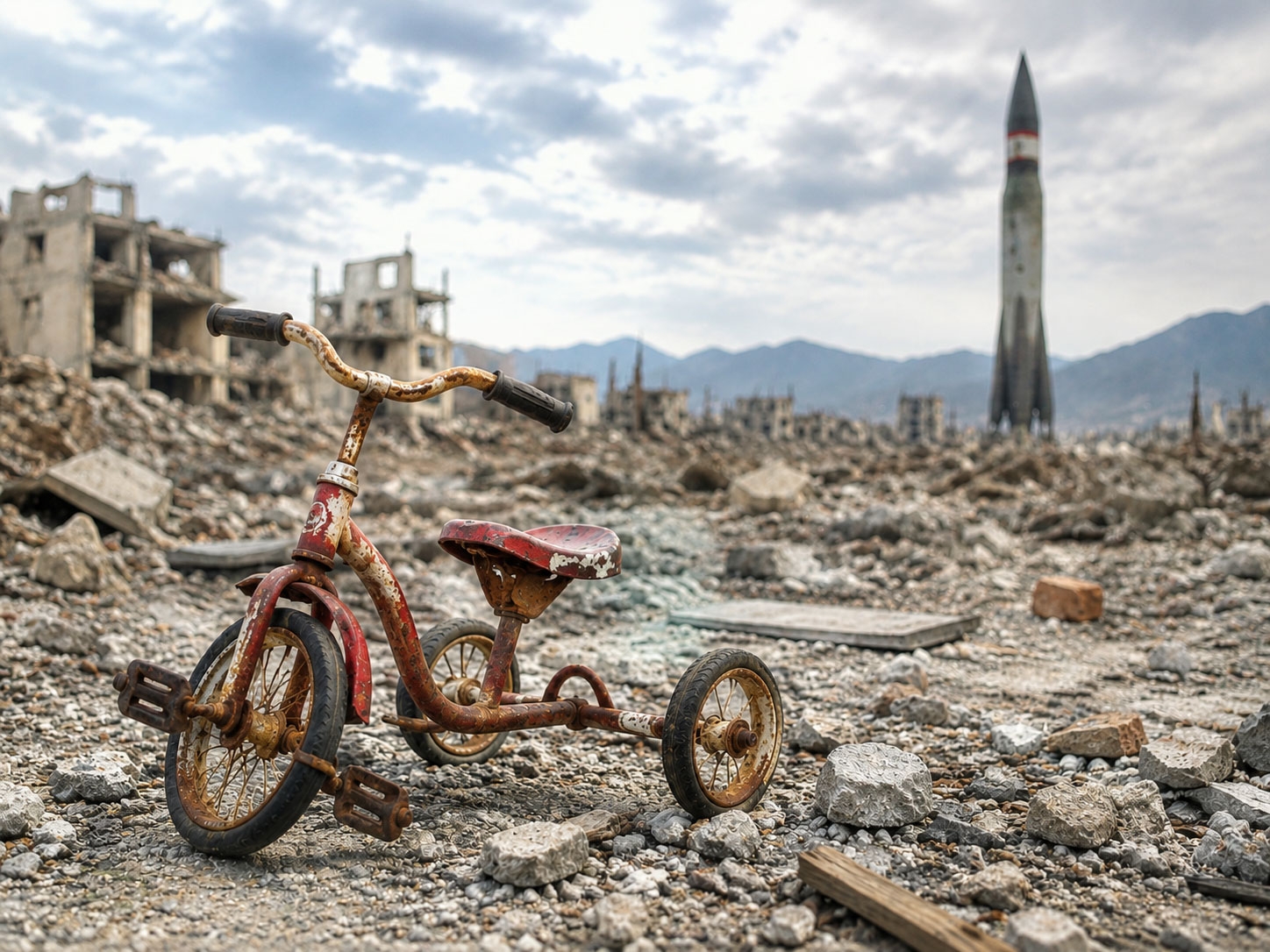
“Shinichi Tetsutani (3 years and 11 months old) loved to ride his tricycle. That morning he was riding in front of his house when, in a sudden flash, he and his tricycle were badly burned. He died that night. His father felt that he was too young to be buried in a lonely grave away from home and, thinking he could still play with the tricycle, he buried Shinichi with the tricycle in the backyard. In the summer of 1985, forty years later, his father dug up Shinichi’s remains and transferred them to the family grave. This tricycle, after sleeping for 40 years in the backyard with Shinichi, was donated to the Peace Memorial Museum.” (Campaign for Nuclear Disarmament – CND)
Thousands more children like Shinichi were killed in this purposeful, planned atrocity. There were children playing innocently and happily, attending school as usual, having woken up on a morning when they anticipated a day like any other. Almost all of us have had some contact with children, either as parents, grandparents, aunts, uncles or other family members, or have contact with neighbours’ children. We have seen children playing, we have seen children skipping and running, we have heard them cry and seen loved ones soothe their tears.
In his poem, No More Hiroshimas, written in 1960, James Falconer Kirkup (1918-2009) describes a visit to Hiroshima and some of the relics in the Peace Tower:
The ones that made me weep;
The bits of burnt clothing,
The stopped watches, the torn shirts.
The twisted buttons,
The stained and tattered vests and drawers,
The ripped kimonos and charred boots,
The white blouse polka-dotted with atomic rain, indelible,
The cotton summer pants the blasted boys crawled home in, to bleed
And slowly to die.

Remember only these. They are the memorials we need.
It defies belief that an allegedly civilised country could plan and carry out these bombings on two cities with detailed knowledge of their destructive power, fully aware that the lives of thousands of civilians would be brutally extinguished. It is even more obscene that, having witnessed the extent of the killing and destruction and the decades of suffering and sickness that resulted, they could continue to spend billions on developing their lethal atomic arsenals.
More money than ever before was spent on nuclear weapons last year Global spending amounted to $119bn, according to a report by the International Campaign to Abolish Nuclear Weapons (ICAN). The nine nuclear-armed countries spent $16.8bn more than in the previous year.
The UK is now the third largest spender on nuclear weapons in the world after the United States and China. We have overtaken Russia. Estimated figures show the United States spent $69.2bn, a rise of $12.6bn. This figure amounts to more than all other nuclear powers combined. China spent $13.5bn and the United Kingdom $12.6bn.
The nine countries are set on retaining their nuclear arsenals and have developed weapons which are significantly more powerful and destructive than those dropped on the Japanese cities 81 years ago. The US B83 gravity bomb is about 80 times more powerful. Meanwhile they fail to honour the agreements made to deal with the climate emergency, to develop diplomatic means to prevent wars and armed conflict, to address worldwide problems of poverty, disease, starvation and displacement. Instead they choose to fund the manufacture of weapons capable of wiping out the human race and other species who have made their homes on earth.
Eighty-one years after Hiroshima and Nagasaki, nuclear weapons are still presented as an unacceptable danger in the hands of our perceived enemies such as Iran and a legitimate guarantee of security in the hands of our allies. If “never again” is to mean anything, the danger of nuclear weapons cannot depend on who is deemed as having the legitimacy to destroy the world.
Have we ever been closer to global catastrophe and the extinction of humanity?
cc
Discover more from Penumbrage
Subscribe to get the latest posts sent to your email.