
So many column inches, online discussions and news broadcasts have appeared both before and after Professor Jason Arday’s death that show an unnatural interest in his life and death along with a massive chasm in public opinion. Across a 22-day period from the 24 July 2026 until his death on 14 August, 249 articles were written. The majority of the articles echoed the sneering, patronising tone of The Times (behind a paywall) that had gone to the trouble of employing an academic to review every line of Jason Arday’s 2015 thesis and The Telegraph’s so-called expose on 24 July of these plagiarism claims. Even, Hugh Muir in The Guardian on the 19 August felt obliged to defend their journalists’ coverage arguing they were conducting legitimate journalism, rather than participating in a witch-hunt. What is hard to defend though is that all were encouraged by a Substack post written by the right-wing academic Nathan Cofnas, who describes his own attitude to race as “race realism”, a term he uses to frame his belief that intelligence and talent differ between racial groups for partly genetic reasons. All articles present allegations against Jason Arday as established facts rather than contested claims, using language associated with scandal, exposure and wrongdoing.
The fact is that the death of Jason Arday is so much more than the devastating loss of a father, husband, son, brother, friend and brilliant young academic.
It is a stain on the savage, competitive and elitist world of academia together with the cruelty and unrestrained actions of some of our media. It is also about privilege, class, disability and conformity, running alongside the racist underbelly of our society. It has taken place against a backdrop where only 1% of professors in UK higher education are from a BME background, 5% have a disability and approximately 10% are from a working-class background. The fact that a young, working-class Black man with autism managed to be recruited to this coveted role is nothing short of miraculous.
This was clearly the view of some of Jason Arday’s fellow academics, who, following his historic and high profile appointment to the University of Cambridge, began scrutinising his publication record. The Times Higher Education reportedly prepared a dossier in 2025 based on these findings that was never published. Their view was clearly that he was not awarded the job on merit and that he was nothing more than a “poster boy” for diversity. Their attempts to find evidence of this were forensic and obsessive.
What separates Jason Arday’s case from other historical parallels is that the scrutiny was three-pronged. Investigators did not just audit his footnotes; they audited his actual data authenticity, his professional credentials, and his personal biographical narrative (including his athletic feats and charity metrics). The convergence of these factors created a level of pressure rarely seen in the history of academia.
The forensic examination of his thesis allegedly found errors and duplicated sentences from an earlier thesis by by Paula Zwordiak Myers from Brunel University. It is important to note that the allegedly identical passages were in background sections, like the literature review, not in the analysis or in his original research. Therefore, they would not have impacted the thesis’s conclusions or the interpretive analysis which included original research and an analysis of those findings. No academic body found that the originality of the findings was compromised.
Journalists and academics also disputed, investigated or challenged biographical details including severe childhood developmental challenges, extraordinary physical achievements, inspirational “prophetic” moments and claims of charitable feats and media appearances. No evidence was found to support allegations of fraud other than a statement he made in an interview that he had appeared on the BBC documentary “Seven Up” which was aired before he was born.
The Telegraph article frames Arday’s memoir as a “case study in self mythologising” and suggests his life story “stretches credulity to breaking point.” This is interpretive commentary, not evidence based reporting. They called him a “fantasist” which shifts the story from evidence to character. Once someone is framed as a “fantasist,” subsequent allegations (e.g., plagiarism) are interpreted through that lens, even if unrelated.
The reality is that academia is littered with cases of deceit far more egregious than that Professor Arday was accused of. The UK Research Integrity Office (UKRIO) has reported several anonymised cases where lecturers copied student essays into conference papers, used student data without permission with some professors publishing student ideas as their own. These cases rarely reach the media because UK universities treat staff misconduct as an HR matter.
Professor William O’Reilly another Cambridge professor was found guilty of copying one of his student’s essays into his own article but there was no media storm, and he kept his job as the plagiarism was found to be negligent not intentional.
More importantly, these errors whether deliberate or not do not justify the disproportionate response from fellow academics and some sections of the media. Evidence of the hostility that emanated from this hysteria resulted in panic buttons being installed in Jason Arday’s office and the need to screen the thousands of racist emails he received daily.
For minor plagiarism in a PhD thesis, especially in background sections or literature reviews, UK universities almost always treat it as a correctable error, not misconduct. The usual response is revision, clarification, or a warning, not degree revocation.
Cambridge did not award the degree, but they still felt bound to launch a formal investigation into the allegations. Cambridge’s decision was clearly driven by institutional duty, reputational management, and external pressure, not by the strength of the claims. Cambridge could not simply ignore them.
Following Jason Arday’s resignation, dozens of senior Cambridge academics demanded accountability from the university leadership regarding how Jason Arday was vetted and appointed to such a prestigious chair in 2023.
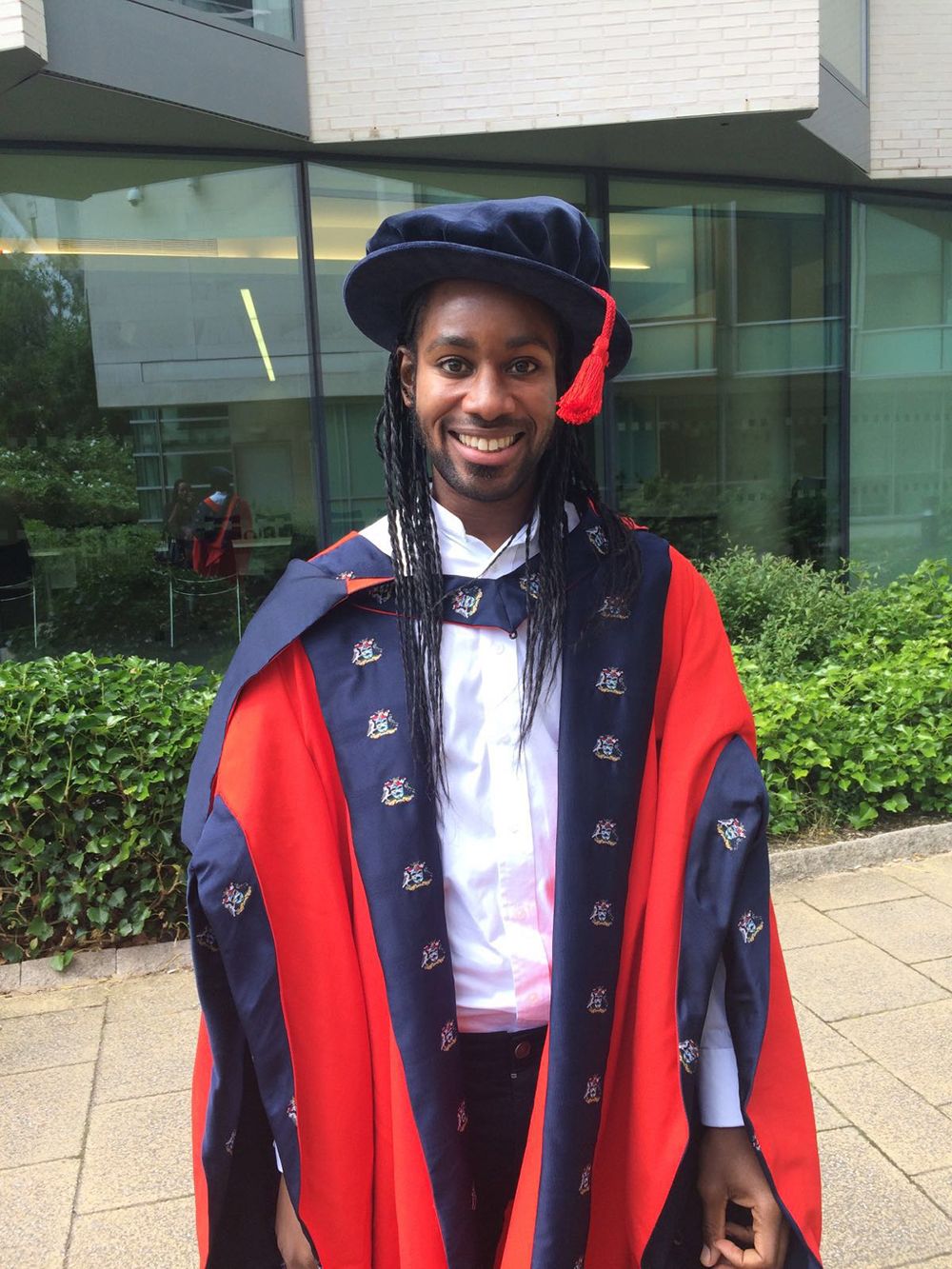
It is hard not to feel a deep sadness when you see that proud, hopeful image of Jason Arday in his academic gown and realise that a network of privileged academics and media figures were already lining up to tear him down. People who had been supported and encouraged from childhood, who moved easily through elite schools and universities, seemed determined to crush someone who had overcome obstacles they never had to face.
No one is arguing that we should accept that standards should be watered down or that positions should be filled on anything but merit.. Positive discrimination is illegal in the UK. But positive action is not, and this accepts that support is often appropriate as a way of levelling the playing field. What is not acceptable is treating someone less favourably as a result of a protected characteristic. And this happens far too often.
This is why minority voices remain so scarce in senior positions in public life. The moment someone rises, the scrutiny becomes harsher, and the hostility more overt. You could see that truth in the quiet dignity of the vigil held for Jason Arday, where people gathered to insist that he be recognised as a human being rather than a headline. And it is impossible not to forget how Benjamin Zephaniah was treated when he was invited to Cambridge in 1987, only to face a racist tabloid backlash that asked, “Would you want your daughter near this man?” The pattern is old, and it is brutal.
Benjamin Zephaniah withdrew because of the racist backlash. Jason Arday took his own life. Both were failed by a society where racism and class remain deeply and painfully embedded.
Discover more from Penumbrage
Subscribe to get the latest posts sent to your email.